Skip to content
ErinMills Garage Door ExpertsOpen 24/7 (289) 805-3145
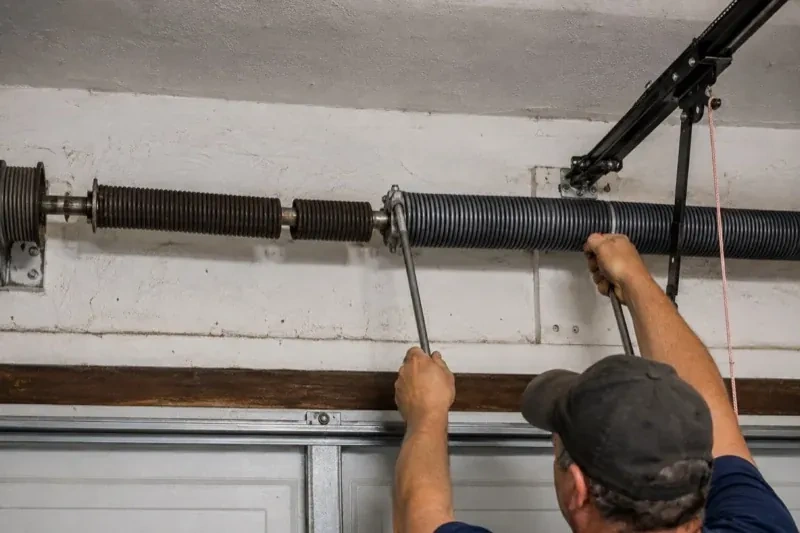
Person holding metal bars beside exposed coiled springs above a garage door. — Torsion Spring Replacement, Mississauga

Springs · Mississauga

Torsion Spring Replacement

Nothing broke outright, but the door has grown heavier each winter, opens more slowly and squeals as it moves. The springs on an older door have lost tension and the coils show pitting, so the system is asking for attention before it fails.

In plain words

Every spring is built for a number of open-close cycles, and replacement is a natural moment to choose that number deliberately. A standard residential spring is commonly rated around ten thousand cycles; a family that opens the door six times a day uses those up in a few years. Higher-cycle springs use heavier wire and a longer coil to produce the same force with less stress on the steel, so they last proportionally longer. The technician can explain the trade-off and fit whichever option suits the household's use of the door, then wind and balance it accordingly.

Sound familiar?Mississauga

The call
After pulling the red release cord, you tried lifting the door yourself and it would barely leave the floor. A door that used to glide up with one hand now takes real effort, which points to the counterbalance rather than the opener.
NextHow the visit goes

Torsion Spring Replacement · Mississauga

How the visit goes

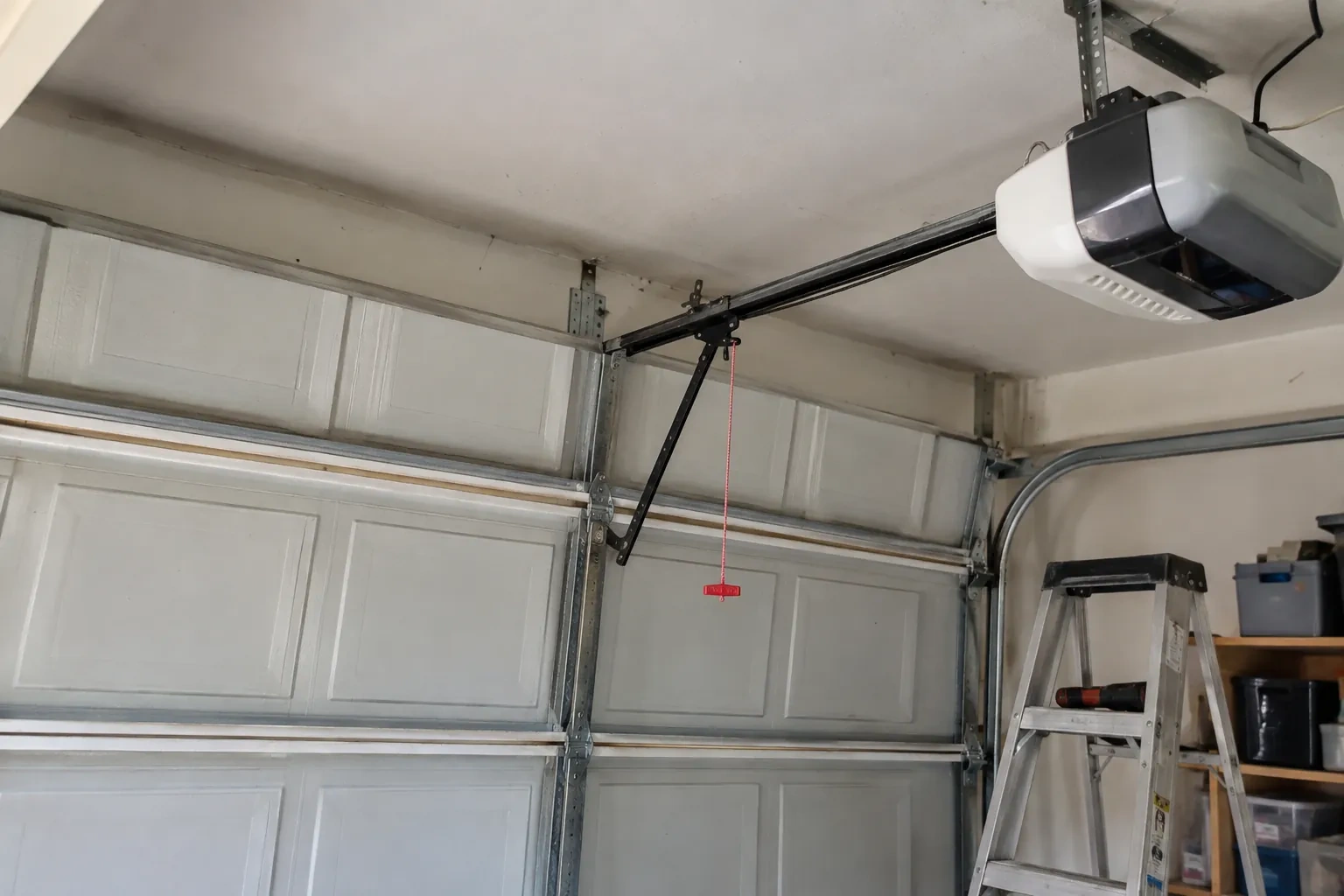
Garage-door opener on the ceiling with a bent black arm to a paneled door, a red release cord and a stepladder.
  1. Scene 1

    Understanding how the door is used

    How the household uses the door shapes the spring that suits it. The technician asks how many times a day it typically opens, whether it is the main entrance to the home, and when springs were last replaced, if ever. A door cycled eight times a day accumulates use far sooner than a weekend garage. Age of the door and any previous partial repairs are also relevant, especially a single spring changed on a paired system. This conversation lets the customer choose between a standard-cycle spring and a higher-cycle option with a clear picture of what each means for them.

  2. Scene 2

    Winding with control

    Winding is where a spring takes on its working tension, and it is done with two solid steel bars sized to the holes in the winding cone. The technician stands to the side of the cone, inserts one bar, turns a quarter turn, inserts the second bar, and transfers the load from bar to bar so the spring is never held by less than a full bar. The number of quarter turns is counted against the door height and drum type. When the count is reached, the spring is stretched slightly toward the drum and the set screws are tightened to the shaft while the last bar still carries the load.

  3. Scene 3

    Your spring on record

    The technician leaves you with the specification of what was installed: wire size, inside diameter, length, wind direction and the cycle rating chosen, along with notes on any bearings or cables replaced. Keep that record with the door's paperwork or photograph it. It means future service starts from known numbers rather than fresh measurement, and if a door section or opener is ever changed, the installer can confirm the springs still suit the door's weight. Many technicians also mark the installation date on the spring or centre bracket so the age of the system is easy to read later.

In the van

  • Wire gauge and tape measure
  • Lift cables
  • Winding bars
  • Stationary cone bolts and nuts
  • Locking pliers for the track

What shapes the quoteErin Mills Garage Door Experts

One spring or two
A single-spring door needs one spring; a paired system is usually replaced as a matched set of left- and right-wound springs. The number of springs and whether both are replaced is the largest single influence on the scope.
Access and working space
A vehicle that stays inside, shelving under the shaft, a very high ceiling or a tight side clearance affects how the technician sets up and how long the visit runs.
Opener reconnection and testing
Resetting force and travel limits and running the reversal and photo-eye tests are part of the visit. An opener with worn gears or a slipping trolley uncovered during testing becomes a separate item.

FeesSame any hour

Have it ready

Before you call · 0 / 3

(289) 805-3145

Answers in plain language

What other parts are often replaced with the spring?

The shaft is free during a spring change, which makes it the natural time to renew the centre bearing and end bearings if they grind or wobble. Lift cables that show fraying or rust at the bottom brackets are replaced so the new spring pulls on sound steel, and cracked or worn drums are swapped. On older doors, a corroded centre bracket or loose lag bolts may also be addressed. Each item is shown and explained before it is added.

Does the opener need adjusting after the spring is replaced?

Usually a little. A balanced door presents a much lighter load than a door with a broken spring, so the opener's force settings are reset to suit it, and the travel limits are checked so the door seals at the floor and stops cleanly at the top. The technician then runs the reversal test and the photo-eye check to confirm the safety system responds correctly with the new balance.

How often should the springs be lubricated, and with what?

Once or twice a year is a good rhythm, with autumn the most useful time because cold thickens grease. Use a garage-door lubricant, typically a silicone or lithium spray, applied along the coils so it works between them as the door cycles. Hinges, roller bearings and the end bearings benefit from the same treatment. Keep the track itself dry, since lubricant there gathers grit and slows the rollers.

Mississaugainformation

PeelOntario

Town
Mississauga, Peel
In business
30 years
Hours
Open 24/7
Nights, weekends and holidays, same fees
Visits
On-site assessment preferred. Request a visit or call.

2021 census: what it means at the door

Every square is one home in a hundred.

  • 38 in 100 homes · mixed ages
  • About 38% of homes in Mississauga were built in 1980 or earlier, according to the 2021 Census.A blend of older and newer homes usually means a blend of expectations too: keeping an original door running as long as sensible, or bringing a builder-grade door up to a quieter standard. Both are worthwhile, and the choice is explained at the door with the options side by side.
  • Single-detached houses make up about 37% of homes in Mississauga (2021 Census).Townhouse and condo owners often share responsibility for the door with a board or property manager, so we provide a clear written report after each visit: what was found, what was replaced and what is likely to need attention next, ready to pass along.

Source: Statistics Canada, Census Profile

Open Mississauga in Google Maps

On-site assessment

Request a visit.

Nothing broke outright, but the door has grown heavier each winter, opens more slowly and squeals as it moves.

(289) 805-3145, open 24/7.