Sound familiar?Mississauga
- The call
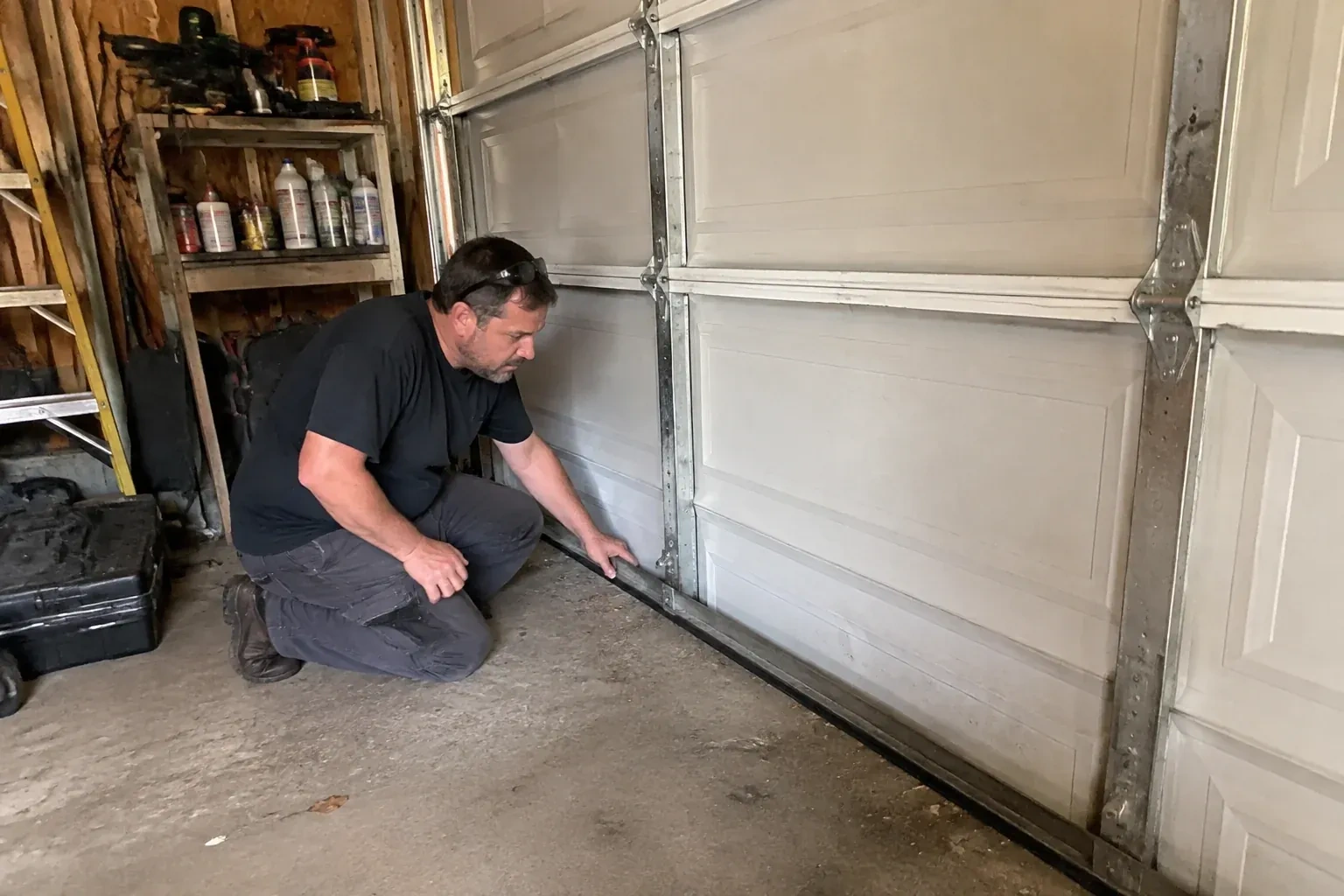
- The cable has wrapped itself around the shaft above the door instead of sitting on its drum. When the opener runs, the door lurches, one side rises before the other, and the top panel twists.
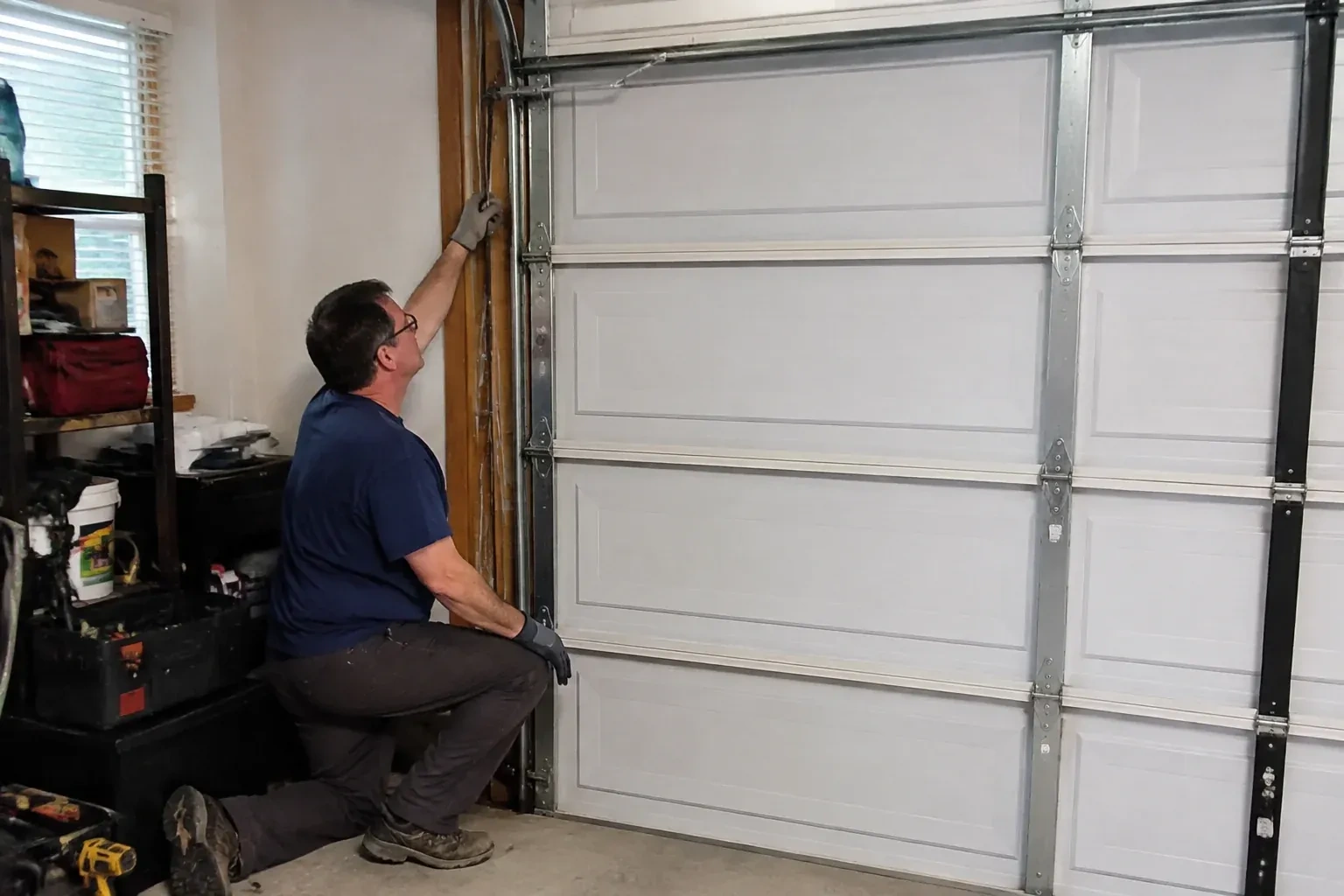
A cable visit runs in a set order. First the opener is disconnected and the door clamped so nothing can move. Then the counterbalance is unloaded so the drums, cables and bottom brackets can be handled calmly. The old cables come off, the drums and brackets are inspected, and new cables of the correct specification go on. Both sides are tensioned evenly until the door sits level, then the springs are wound back to the turns the door height calls for. Finally the door is balanced by hand, the opener reconnected and its travel and reversing checked. You are shown the finished door working before the technician leaves.
Sound familiar?Mississauga
Garage Door Cable Replacement · Mississauga
Scene 1
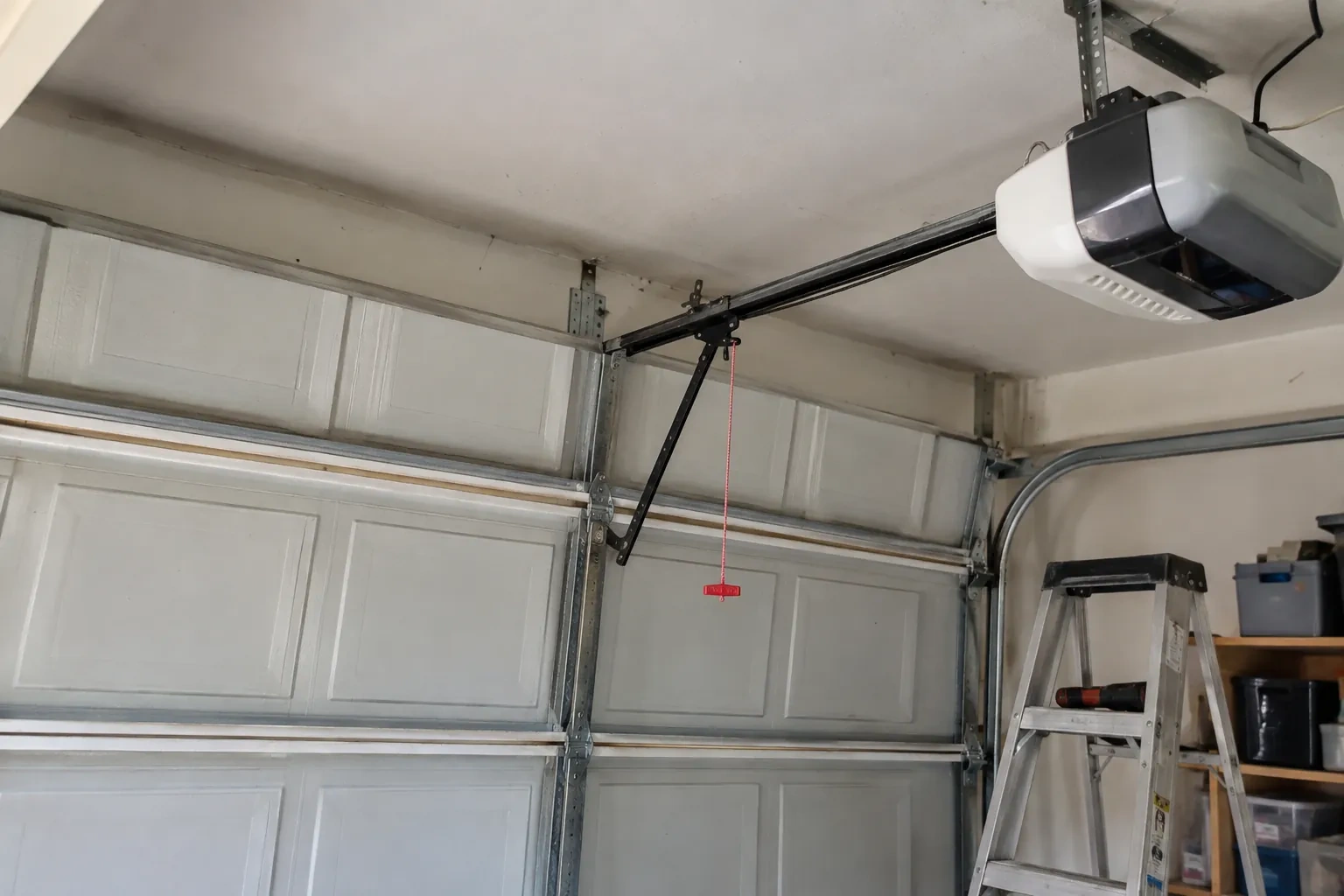
The technician identifies the counterbalance before choosing parts. A shaft with drums above the header means a torsion system; springs stretched beside the horizontal tracks with pulleys mean extension. Then the lift type: standard lift on most attached garages, low headroom hardware where the ceiling is tight, and high lift where the door climbs well above the opening before turning. Each uses a different drum profile and a different cable length, and a double door of the same height may need a heavier cable than a single. Reading these details correctly is what makes the replacement cable wind evenly on the drum instead of overlapping.
Scene 2
Before any spring tension returns, both cables are brought to the same tension. The technician rotates each drum until the slack is gone and the cable is snug in its groove, then tightens the set screws onto the shaft, often onto a small flat so the drum cannot creep. A level on the top section confirms the door sits square in the opening, and the gap under the bottom seal is checked along its length. If one corner sits high, the drum on that side is eased and reset. This is the moment that decides whether the door will run straight for years, so it is not hurried.
Scene 3
The simplest care is a look. Once a month, with the door closed and the light on, stand inside and follow each cable from the bottom bracket up to the drum. You are looking for broken wires standing out from the strand, a brown bloom of rust near the bottom loop, a kink, or a cable that hangs slack while the other is taut. Then check the door sits level and each drum shows a neat single wrap. Anything you notice is worth a call while it is still a small job. The whole check takes less than a minute and is the same one the industry maintenance checklist recommends.
What shapes the quoteErin Mills Garage Door Experts
FeesSame any hour
The idea is the same and the route is different. Instead of winding onto a drum, the cable runs from the bottom bracket up over a pulley at the front of the track, back over a pulley on the spring, and to an adjusting clip. The technician relaxes the springs by opening and clamping the door, replaces worn pulleys along with the cable, sets both clips the same, and confirms a containment cable runs through each spring.
Because of where they live. The bottom loop of each cable sits at floor level in the corner of the garage, exactly where slush and road salt drip off the car and pool through the winter. Salt water works into the strands and rusts the cable from inside, so it looks thin and brown near the bracket while the upper run still looks new. Keeping that corner clear and lightly lubricated slows it considerably.
A lift cable does the work: it connects the door's bottom corner to the spring system and carries the door's weight. A safety or containment cable does no lifting at all. It runs through the middle of an extension spring and is anchored at both ends so that if the spring breaks, the pieces stay put. Torsion springs sit on a shaft and do not need one.
PeelOntario
Garage Door Cable Replacement · Erin Mills, Erindale, Erindale Woodlands, Sheridan Homelands, Sherwood Forrest
Every square is one home in a hundred.
On-site assessment
There was a sharp crack from the garage, and when you went to look the door had dropped on one side and jammed.
(289) 805-3145, open 24/7.
On-site assessment preferred · (289) 805-3145, open 24/7